Feature requests and retention risk signals

Customer Feedback, Suggestions & AI Support in One Platform

One widget, two jobs. It answers customer questions from your content, and when it can't, offers to turn it into feedback the visitor sends. Everything lands in one customer feedback inbox, including your anonymous suggestion box.

AI support assistant · Sentiment and duplicate analysis · Feature voting · Public roadmap · Changelog

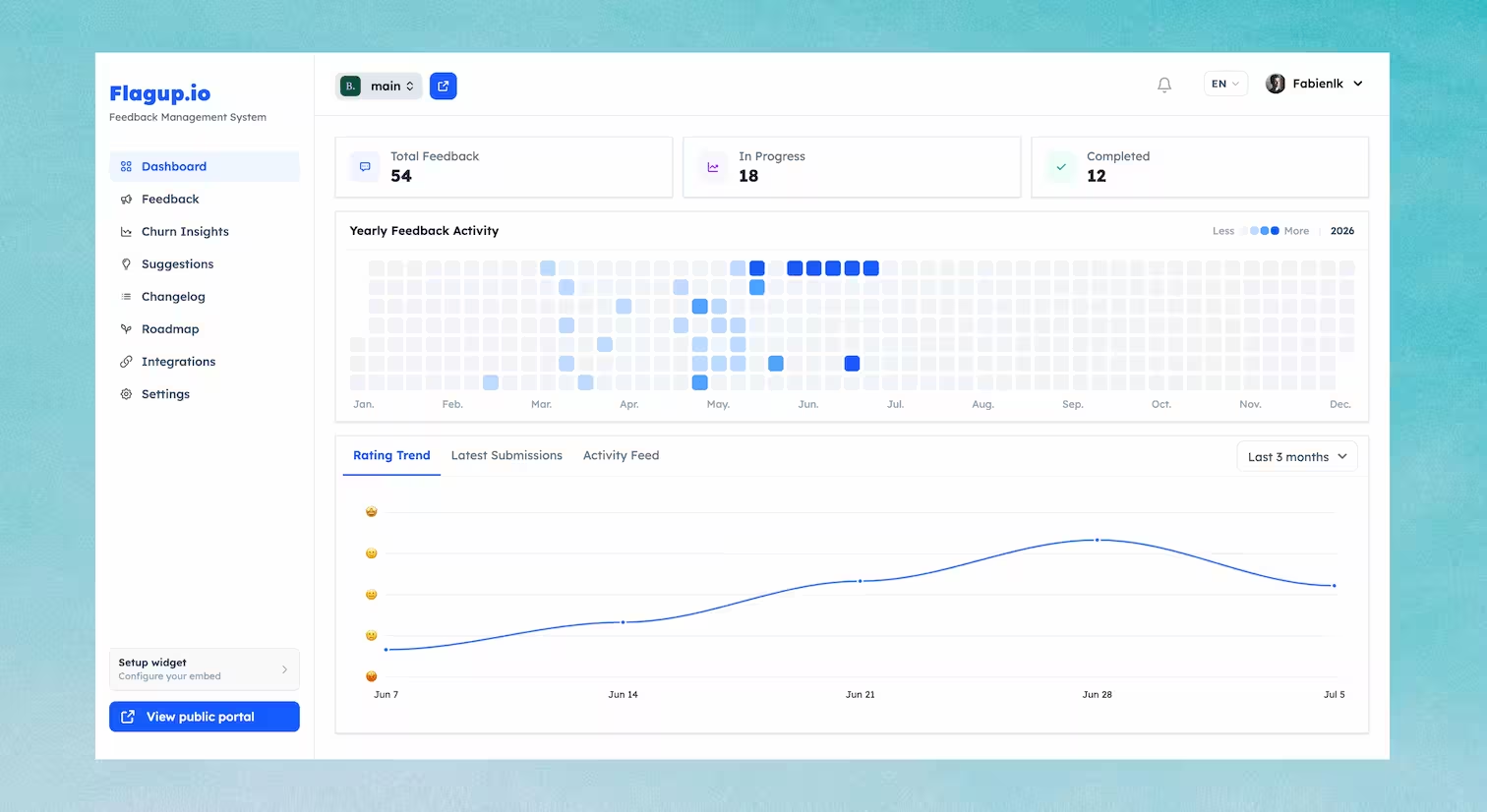
FlagUp customer feedback dashboard showing submission counts, a yearly activity heatmap, and a rating trend chart
Free plan available No credit card required One script tag to embed

For startups, agencies, small businesses, schools, and non-profits

The category

What Is Customer Feedback Management Software?

Customer feedback management software gives a team one place to collect, organize, analyze, and act on what customers are saying. Instead of leaving feature requests, complaints, bug reports, and ideas scattered across email, support tickets, chat, and spreadsheets, the feedback becomes a structured backlog the team can prioritize.

FlagUp combines collection tools with AI-assisted analysis, feature voting, a public roadmap, and changelog updates, so one workflow carries a raw customer message through to a product decision and back to the customer when something ships. Feature requests, suggestions and bug reports all arrive in the same inbox.

For the longer version, read the customer feedback management guide.

The problem

Why Customer Feedback Becomes Hard to Manage

Four things go wrong in almost every backlog, whatever tool it lives in.

01

Feedback lives in too many places

Requests arrive through support, email, chat, surveys, and in-product conversations. Without one system, the pattern across them is easy to miss.

02

Duplicate requests hide real demand

Customers describe the same need in different words. A fragmented backlog makes one recurring request look like several unrelated ones.

03

Votes alone do not show impact

Vote counts help, but priority also depends on sentiment, how often a request comes back, which accounts are asking, and what it takes to build.

04

Customers rarely see what happened next

When feedback disappears into a backlog, the person who sent it never learns whether it was read, planned, declined, or shipped.

How it works

From Customer Feedback to Product Decisions in Four Steps

Four screens from the product, in the order a request moves through them.

  1. 1

    Collect feedback where customers already are

    Capture product feedback with an embeddable widget, a public feedback portal, a feature request board, or a shareable suggestion box. Submitting needs no account. On Pro and Business, the same widget can answer customer questions from the project's knowledge before a feedback item is needed.

    Feedback Widget Suggestion box Feature Requests

    yoursite.com
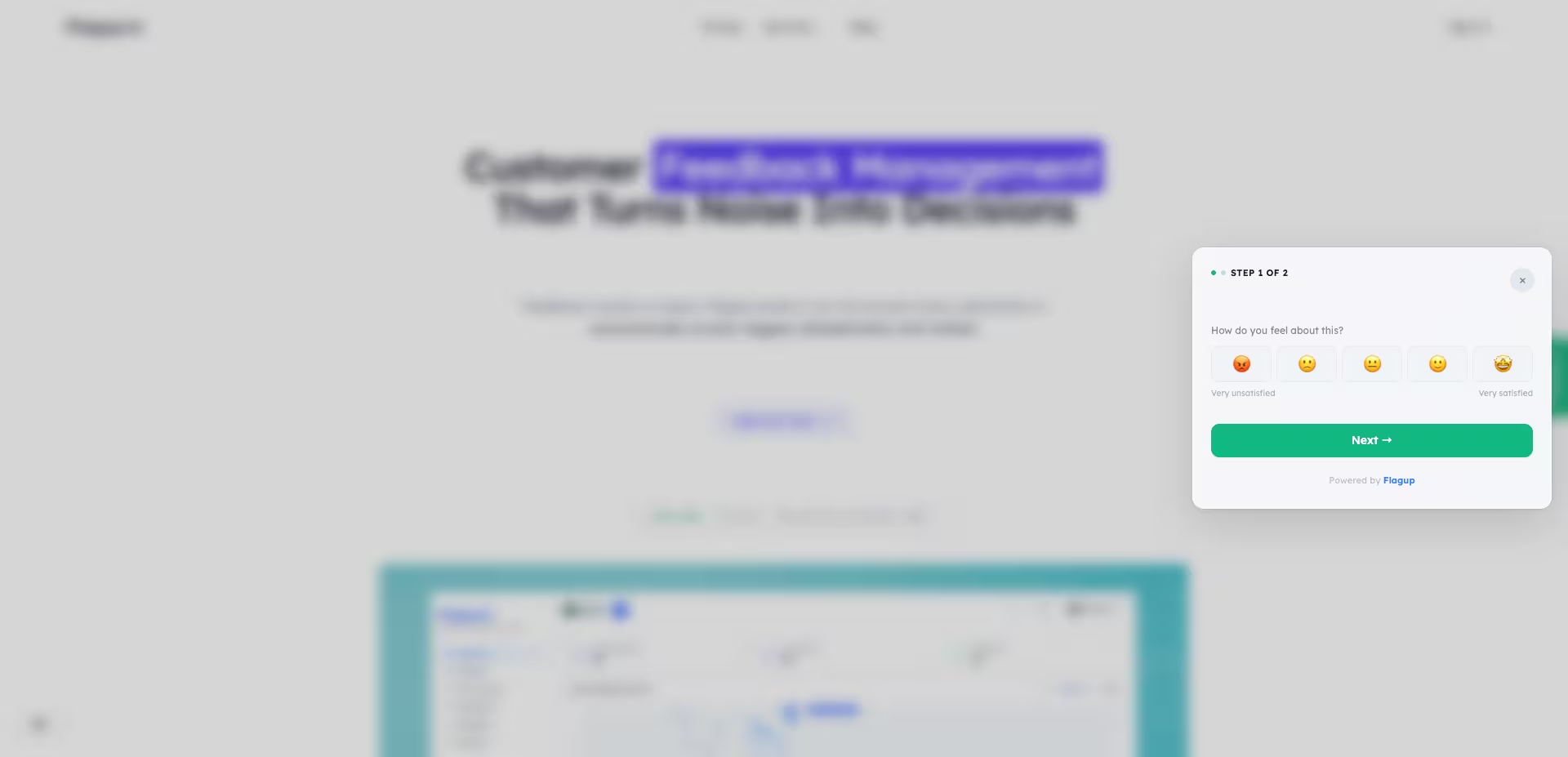
    FlagUp feedback widget open on a customer product page, with the submission form ready
  2. 2

    Centralize and structure every submission

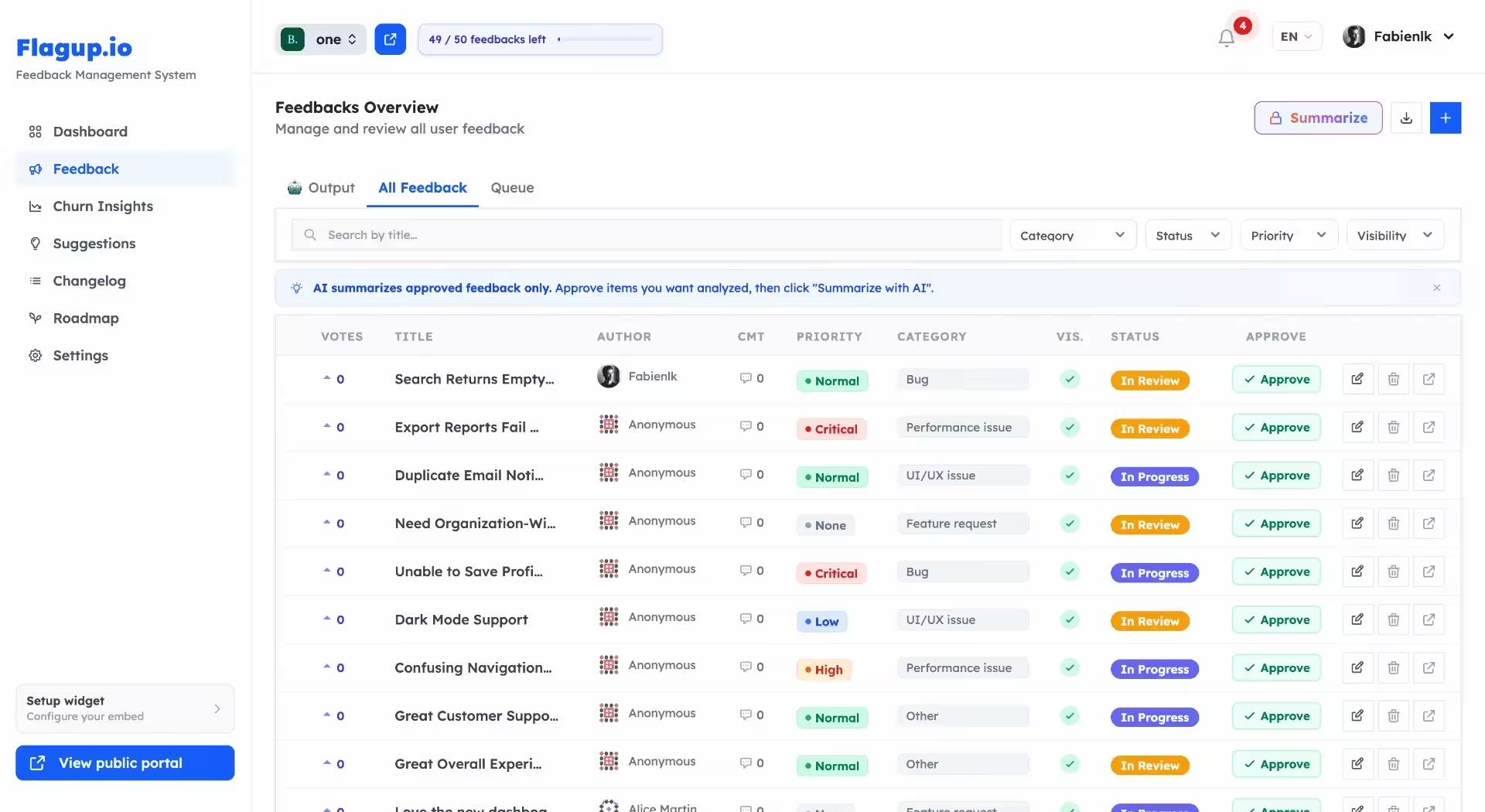
    Everything lands in one searchable inbox, carrying the category and rating the sender chose, plus the status, priority, votes, and customer context your team keeps on it.

    app.flagup.io/inbox
    FlagUp centralized feedback inbox listing submissions with their category, status, and rating
  3. 3

    Use AI to find patterns, sentiment, and duplicates

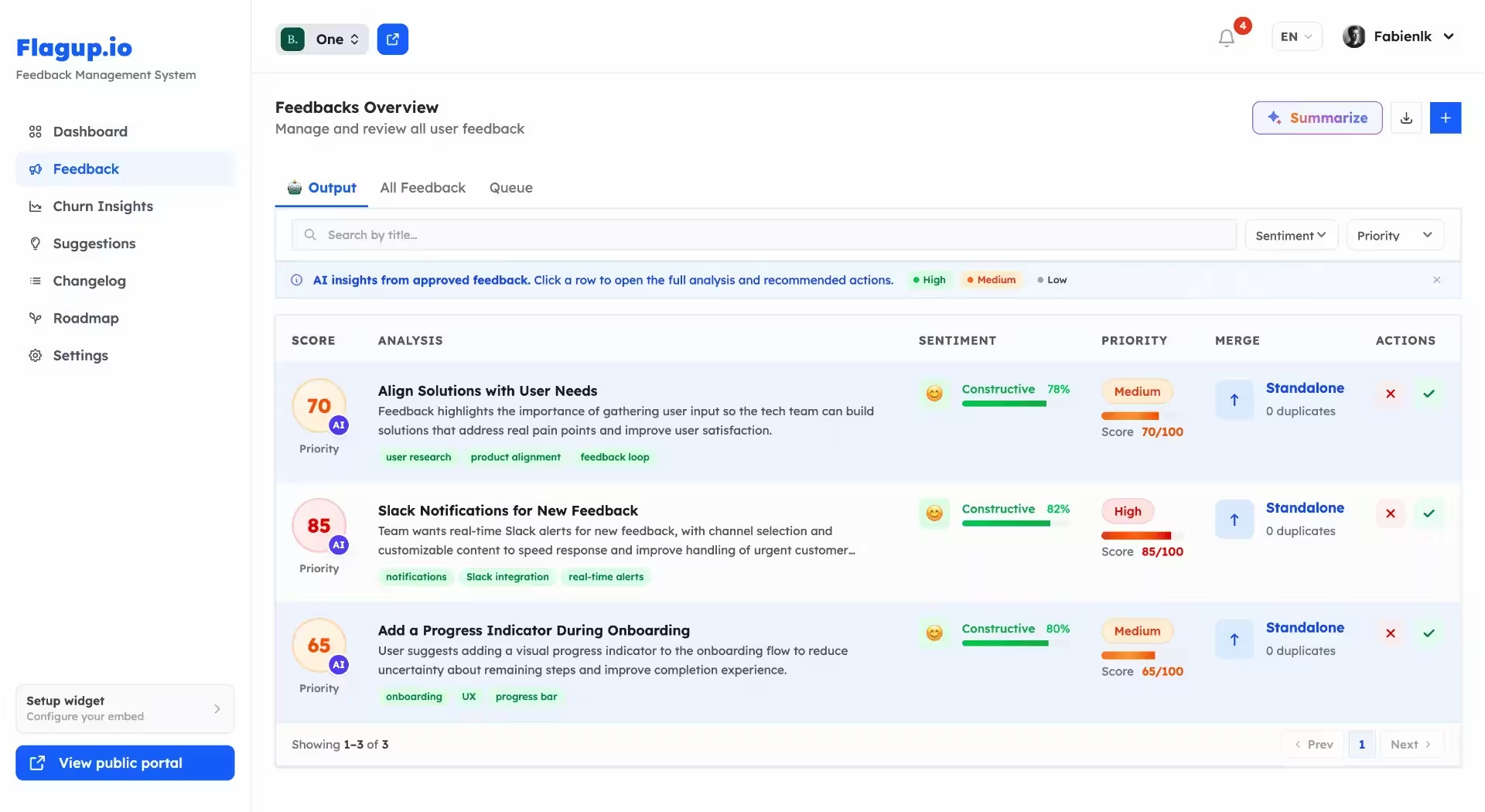
    Start an analysis pass over the feedback you have approved. FlagUp labels sentiment, tags topics, groups similar requests, and scores priority, so you review a cleaner backlog. Paid plans.

    app.flagup.io/insights
    FlagUp insights view showing feature requests ranked by priority score and urgency
  4. 4

    Show customers what happens next

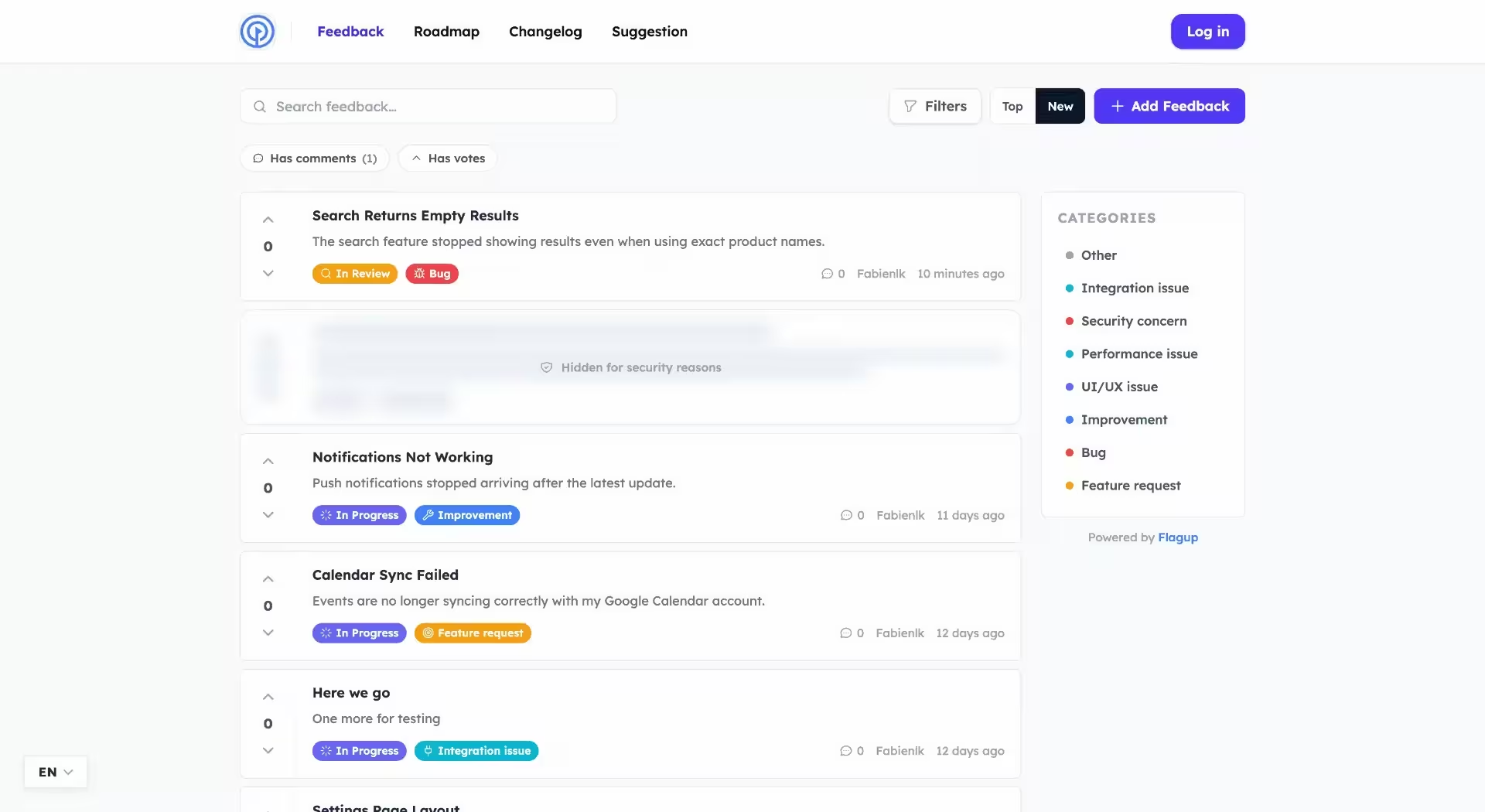
    Move accepted ideas onto a public roadmap and publish shipped work in a changelog, so people can see what became of what they sent.

    Roadmap Changelog

    myproject.feedback.flagup.io/portal/roadmap
    FlagUp public product portal showing a roadmap with votes and feature statuses
AI support assistant New

AI Customer Support Assistant: Answer Questions, Turn the Rest Into Feedback

FlagUp adds a per-project AI customer support assistant, an AI chatbot for your website, to the same widget your customers already use for feedback. It answers from that project's knowledge base and nothing else, so the repetitive questions your content already covers stop reaching your inbox. When the answer is not there, it says so, and the conversation can become a pre-drafted feedback item that the visitor reviews before submitting.

  • Answers from your own knowledge base

    Point FlagUp at your website and it reads your public pages into answer documents, or write entries yourself. Each project keeps its own knowledge base, and its assistant retrieves from that project alone.

  • It says when it does not know

    Content that is not relevant enough never reaches the model. When nothing in the project clears that bar, the assistant is given nothing to answer from and is told to say the information is not available rather than fill the gap from general knowledge.

  • Knowledge gaps become feedback

    A question your content does not cover does not have to end in a chat log. When the conversation reads like feedback, or the visitor marks an answer as unhelpful, FlagUp drafts a title, description, and category from it. The visitor edits that draft and sends it, and nothing is created until they do.

Assistant

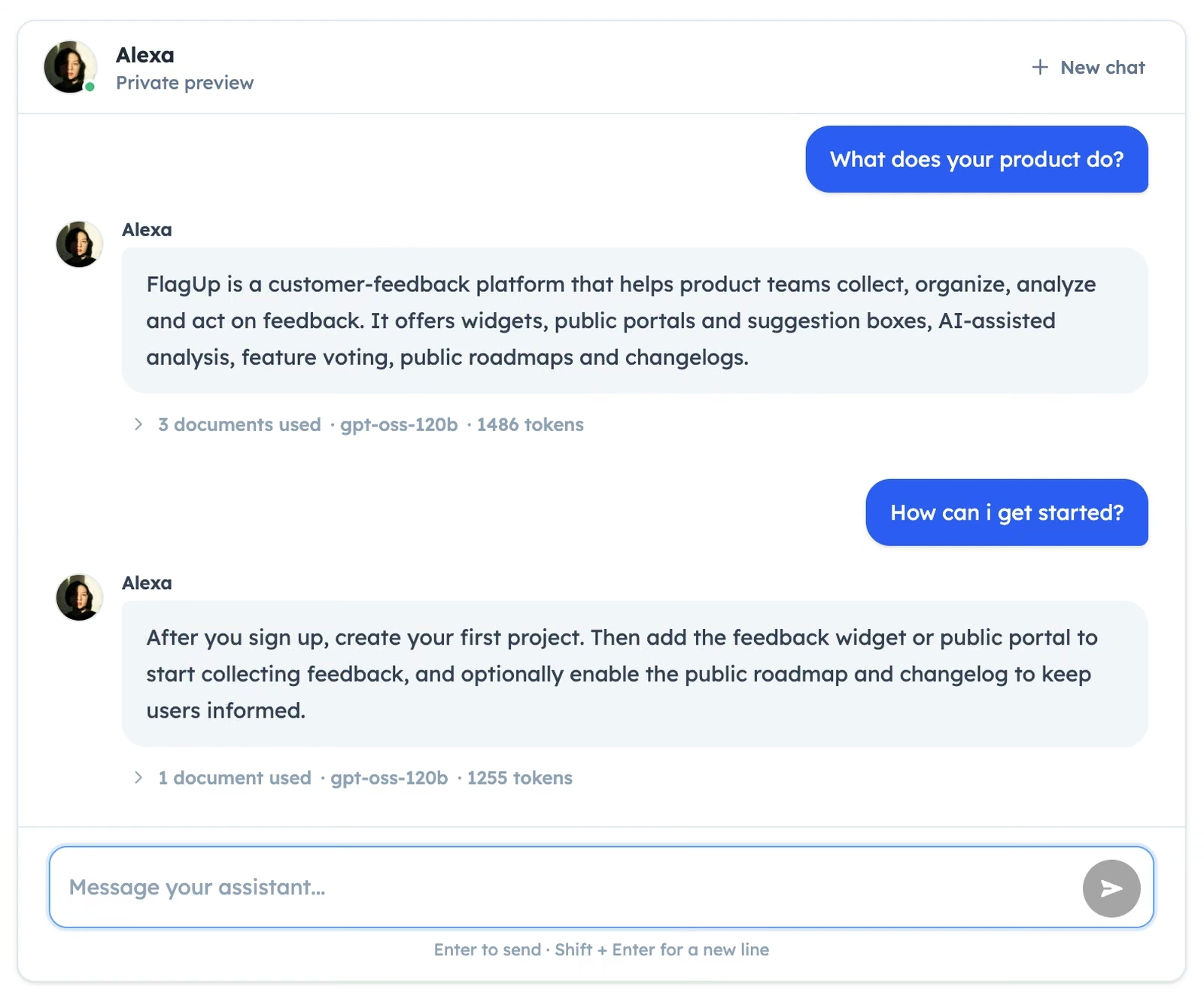
Example conversation

New chat

Visitor: What is your refund policy?

Assistant

Every paid transaction can be fully refunded when requested within 14 calendar days. No reason is required.

Visitor: Can I pay in instalments?

Assistant

I do not have that in this project's knowledge base. Do you want to turn it into a feature request? You can edit it before it is sent.

No knowledge used
Message your assistant…

An illustration, not a live chat. Answers come from the knowledge base of whichever project the widget belongs to.

Built for control, not improvisation

  • Owner-controlled name, avatar, tone, behaviour rules, and on or off state
  • Optional read-only API tools, so the assistant can answer from live data on your own endpoints
  • Analytics for conversations, resolution rate, answer ratings, fallbacks, and recurring knowledge gaps
  • Conversation storage you can switch off, and a retention window a daily job enforces
  • Bring your own AI provider key on the paid plans

Available on Pro and Business. AI usage is included by plan, or you can bring your own provider key.

See pricing
AI analysis

AI Customer Feedback Analysis Without Losing Human Control

AI is here to cut the reading, not to choose the roadmap. You approve the feedback, you start the analysis, and your team still decides what gets built.

  • Sentiment analysis

    Each analyzed submission is labelled negative, neutral, positive, or constructive and given a score, so frustration and repeated complaints are easier to find.

  • Duplicate detection

    Similar requests are grouped and flagged as likely duplicates of one another, so repeated demand shows up as one theme instead of a dozen scattered entries.

  • Topic detection and categorization

    Submissions are tagged around recurring themes such as onboarding, billing, bugs, usability, and feature requests.

  • Prioritization support

    Each analyzed item gets a priority score and an urgency level. That produces a review queue for your team, not a decision.

  • Summaries

    Long submissions and suggestion threads are condensed into a short summary that is quicker to read than the thread.

  • Retention risk signals

    Accounts whose feedback has turned negative, or that have gone quiet, are surfaced for review. These are threshold-based signals over sentiment and inactivity. FlagUp does not predict that anyone will leave.

FlagUp priority score breakdown for one feature request, showing the sentiment, volume, and urgency inputs behind it

AI organizes the signal. Your team makes the product decision.

AI analysis, retention signals, and integrations are on the paid plans. See pricing.

How retention risk signals work

Capabilities

Everything You Need to Run a Customer Feedback Loop

Each part of the loop has its own page if you want the detail. Read our product feedback insights for strategies on building what users actually ask for.

  • Feature request management

    Collect requests, track status, and see which ideas keep coming back.

    Learn more: Feature request management

  • Feedback voting

    Let people upvote an existing request so visible demand can inform what you build. Available on every plan.

  • Anonymous suggestion boxes

    Share a link when you want lower-friction or anonymous input. No account needed to submit.

    Learn more: Anonymous suggestion boxes

  • In-app feedback widget

    One script tag puts a feedback form in your product, where people are while they feel it.

    Learn more: In-app feedback widget

  • Public or private roadmap

    Show what is under review, planned, in progress, or done, and keep sensitive planning on an internal board.

    Learn more: Public or private roadmap

  • Product changelog

    Publish shipped improvements so customers can see that feedback led to something.

    Learn more: Product changelog

  • Threaded replies and moderation

    Reply in context, edit, re-categorize, or remove a submission. The conversation history stays on the item.

  • Retention risk signals

    Review the accounts whose sentiment has worsened or who have stopped submitting.

    Learn more: Retention risk signals

  • AI customer support assistant

    Answer visitor questions from the project knowledge, see what your content does not cover, and turn unresolved conversations into editable feedback.

    Learn more: AI customer support assistant

Who it is for

Built for Teams That Need Better Customer Signals

The same loop runs at very different volumes. FlagUp is priced and set up for the smaller end of it as well as the larger.

  • Founders and small product teams

    Work out what to build next without turning every customer request into a roadmap commitment.

  • Product and engineering teams

    Centralize product feedback, find the needs that recur, and prioritize with clearer evidence than a vote count.

  • Customer success and support teams

    Track repeated complaints and negative sentiment, then close the loop once an issue has been addressed.

  • Agencies, schools, and non-profits

    Give clients, students, or members one structured place to send ideas instead of a pile of scattered messages.

Integrations

Keep Feedback Connected to the Tools Your Team Uses

When a submission arrives, FlagUp can push it straight into the tool your team already works in.

  • Slack

    Posts each new submission into a channel.

  • Discord

    Posts each new submission into a channel.

  • Jira

    Creates an issue from a new submission.

  • Linear

    Creates an issue from a new submission.

  • Notion

    Creates a page from a new submission.

  • Trello

    Creates a card from a new submission.

These connections are one-way: FlagUp sends new feedback out to these tools. It does not read messages back in from them. Customers reach FlagUp through the widget, the public portal, and suggestion boxes. Integrations are on the paid plans.

Why FlagUp

Why Teams Choose FlagUp for Customer Feedback Management

FlagUp is built for teams that want a working feedback system without assembling a product-operations stack around it. Collect feedback, find the requests that keep coming back, prioritize what deserves attention, and show customers what happened next, from one workflow.

  • Three ways for customers to submit: in-app widget, public portal, and anonymous suggestion box
  • AI-assisted sentiment, topic, and duplicate analysis on paid plans
  • Feature voting and a public board on every plan, including the free one
  • Public roadmap and changelog, so the loop actually closes
  • Retention risk signals built from sentiment and inactivity, with the rules stated
  • A free plan and a published price list, with no sales call in the way
  • One widget for grounded customer support and feedback collection, so unresolved questions can become feedback instead of dead-end chats

Compare FlagUp with other customer feedback tools

Product in practice

What Better Feedback Management Looks Like in Practice

One request, from arrival to shipped.

Sample data. These entries illustrate the workflow. They are not activity from a FlagUp account.

  1. 1

    Five people ask for the same thing

    Separate submissions arrive through the widget and a suggestion box, worded five different ways.

    • "Can I get my feedback out as a spreadsheet?"
    • "Export to CSV please"
    • "No way to share this with my manager"
    • "Need the raw data for our quarterly review"
    • "Download button?"
  2. 2

    The analysis groups them

    You approve the five and start an analysis pass. They come back tagged under one topic, four of them flagged as likely duplicates of the first, each with a sentiment label.

  3. 3

    One item rises in the review queue

    The grouped request carries a priority score and an urgency level, so it sits in the queue next to everything else waiting on you, rather than five entries deep in a list.

  4. 4

    Your team decides

    You accept it, decline it, or ask for more detail. FlagUp does not move it for you, and the score is an input rather than a verdict.

  5. 5

    The people who asked find out

    It appears on the public roadmap while it is planned, then in the changelog when it ships.

Start Free, Upgrade When Your Feedback Volume Grows

Switch between monthly and annual billing below. See the full feature comparison on the pricing page.

  • Free

    Get started at no cost. One project, core features.

    $0 / month

    Always free. No credit card required.

    Start for free
    • Included 1 project
    • Included 50 feedback entries / month
    • Included 3 suggestion boxes
    • Included 25 suggestion responses / month
    • Not included AI assistant on your site
    • Not included AI tokens / month
    • Not included AI feedback analysis (sentiment, duplicates, summaries)
    • Not included AI writing assistance
    • Not included Use your own AI provider key
    • Not included Churn insights
    • Not included Integrations (Slack, Discord, Jira, Linear, Notion, Trello)
    • Not included Export to CSV, Excel and PDF
    • Included Feedback widget and public portal
    • Included Public roadmap
    • Included Public changelog
    • Included Widget customisation (colour, icon, label)
    • Included Private projects
    • Not included Remove the FlagUp badge
    • Not included Email support
  • Pro

    Popular

    For growing startups managing active feedback.

    $19 / month

    $19 billed monthly

    Start for free
    • Included 3 projects
    • Included Unlimited feedback entries
    • Included 10 suggestion boxes
    • Included Unlimited suggestion responses
    • Included AI assistant on your site
    • Included 1M AI tokens / month
    • Included AI feedback analysis (sentiment, duplicates, summaries)
    • Included AI writing assistance
    • Included Use your own AI provider key
    • Included Churn insights
    • Included Integrations (Slack, Discord, Jira, Linear, Notion, Trello)
    • Included Export to CSV, Excel and PDF
    • Included Feedback widget and public portal
    • Included Public roadmap
    • Included Public changelog
    • Included Widget customisation (colour, icon, label)
    • Included Private projects
    • Included Remove the FlagUp badge
    • Included Email support
  • Business

    For established teams with high feedback volume.

    $49 / month

    $49 billed monthly

    Start for free
    • Included 10 projects
    • Included Unlimited feedback entries
    • Included Unlimited suggestion boxes
    • Included Unlimited suggestion responses
    • Included AI assistant on your site
    • Included 3M AI tokens / month
    • Included AI feedback analysis (sentiment, duplicates, summaries)
    • Included AI writing assistance
    • Included Use your own AI provider key
    • Included Churn insights
    • Included Integrations (Slack, Discord, Jira, Linear, Notion, Trello)
    • Included Export to CSV, Excel and PDF
    • Included Feedback widget and public portal
    • Included Public roadmap
    • Included Public changelog
    • Included Widget customisation (colour, icon, label)
    • Included Private projects
    • Included Remove the FlagUp badge
    • Included Email support

Compare all plans

FAQ

Frequently Asked Questions

What FlagUp does, what it does not do, and where each feature sits.

What is customer feedback management software?

It is software that gives a team one place to collect, organize, analyze, and act on customer feedback. Rather than tracking feature requests, complaints, and ideas across email, chat, and spreadsheets, everything arrives in one inbox that can be categorized, prioritized, and published back to customers as a roadmap or changelog.

What types of feedback can I collect with FlagUp?

Feature requests, product feedback, bug reports, general comments, and anonymous suggestions. Customers reach FlagUp through three doors: the in-app widget, your public feedback portal, and a shareable suggestion box. You and your team can also add feedback directly from the dashboard.

How does FlagUp prioritize customer feedback?

Votes are the first signal, and they work on every plan. On a paid plan you can run an AI pass over feedback you have approved, which adds a sentiment label, topic tags, likely-duplicate grouping, a priority score, and an urgency level. Those become a review queue. Your team still decides what to build.

Does FlagUp use AI to analyze feedback?

Yes, on the Pro and Business plans. The AI labels sentiment, detects topics, groups similar requests as likely duplicates, writes summaries, and scores priority and urgency. It runs when a project owner starts a pass, over feedback the owner has approved, so nothing is analyzed or acted on without a person in the loop first.

Can customers submit feedback without creating an account?

Yes. The in-app widget and the suggestion box both accept submissions with no account and no sign-in. Suggestion boxes can be used anonymously, which is the point of them: less friction usually means more honest feedback. You can still moderate, edit, re-categorize, or remove anything that comes in.

Can I publish a public roadmap and changelog?

Yes. Accepted ideas can be shown on a public roadmap grouped by status, and shipped work can be published in a changelog. Both can be turned off per project if you would rather keep planning internal, and sensitive work can stay on a private board.

Is FlagUp free?

There is a free plan with one project, a public voting board, anonymous suggestion boxes, and a read-only public roadmap and changelog. No credit card is needed. AI analysis, retention risk signals, and integrations are on the paid plans. Current prices are listed on the pricing page.

How is FlagUp different from Canny, Upvoty, or Featurebase?

FlagUp covers the same ground: a feedback inbox, a voting board, a public roadmap, and a changelog. What it adds is anonymous suggestion boxes as a first-class way in, and retention risk signals built from sentiment and inactivity. It is aimed at smaller teams that want the loop running quickly rather than a configurable product-operations suite. The comparison hub has the feature-by-feature detail.

How does FlagUp's AI customer support assistant answer questions?

It searches that project's knowledge base first and answers from what it retrieves. Content that is not relevant enough is never sent to the model, and when nothing clears that bar the assistant is told to say it does not have the information rather than answer from general knowledge. Each project's knowledge is separate, so an assistant can only ever retrieve its own project's content.

What happens when the AI assistant cannot answer a customer question?

The question is recorded as a knowledge gap, and the dashboard groups recurring ones so you can see what your content is missing. The visitor can also turn the conversation into a pre-drafted feedback item: FlagUp fills in a title, description, and category from the conversation, and the visitor edits it and sends it themselves. Nothing is created until they press send.

Can I control what the AI assistant knows and stores?

Yes. The project owner controls the knowledge base, the assistant name, avatar, tone, and behaviour rules, whether it is live at all, any optional API tools, whether conversations are stored, and how long they are kept before a daily job deletes them. Pro and Business projects can also connect their own AI provider key.

Still have questions? [email protected]

Our story

Why We Built FlagUp

Collecting feedback was never the hard part.

The hard part was turning a few dozen scattered requests into one clear decision. Feedback arrived through different channels, duplicates made real demand difficult to measure, and the people who sent an idea rarely found out what happened to it.

FlagUp was built around that specific loop: collect the signal, structure it, help a team prioritize it, and close the loop when something changes. The AI exists to cut the reading, not to pick the roadmap, which is why the analysis runs when you ask for it and only over feedback you have already approved.

The widget is small and takes anonymous submissions by default, because honest feedback should not need an account first.

Privacy Policy Terms of Use Contact our support team

Get started

Turn Customer Feedback Into Your Next Product Decision

Start collecting, organizing, and prioritizing feedback in one place. Create your first project for free.

Free plan available · No credit card required

FR ES PT